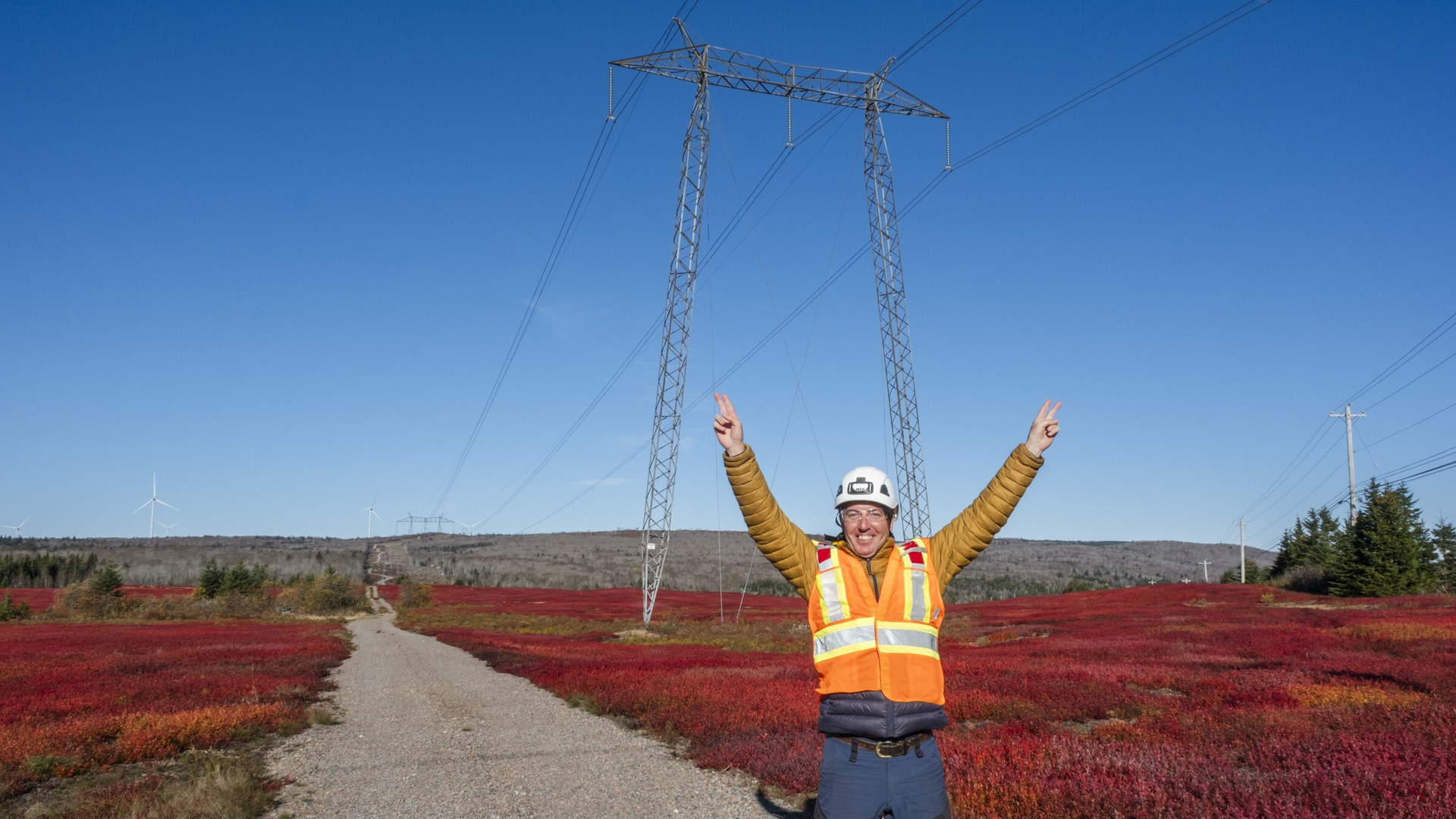

By Andy MacCallum, Atlantic Electricity Cooperation Initiative, and Evan Wilson, Electrifying Canada
Meet Andy and Evan
More than half of Atlantic Canadian homes already have a heat pump (57%, according to our August 2026 survey of 955 Atlantic Canadians).
We’re two people who work on the other half of that story: the wires, power plants, and planning that keep those heat pumps humming at minus 20.
Here’s who we are, and why we think Atlantic Canada is the most interesting place in the country to be doing this work right now.
Andy MacCallum, Executive Director, Atlantic Electricity Cooperation Initiative
I was a heat pump skeptic
I’ve spent about 20 years building renewable energy projects, mostly utility-scale wind projects, across Canada, the United States, and Australia. Some of that work was engineering related, but it was the gallons of tea & coffee shared at kitchen tables, answering questions, and earning the trust of people who were going to live next to my project that I enjoyed the most.
I’ll admit something here, I wasn’t a big fan of heat pumps when they first hit the home heating scene. I burn wood in the winter season, so do a lot of my friends, and I love the high grade heat and ambiance my wood stove provides. But as time went by, my oil burning backup heating system was getting expensive to maintain, with nasty emissions that I couldn’t turn my back to any longer.
I made the switch to a ducted heat pump system a few years ago and was blown away by the simplicity and ease of use. I can turn it on with the push of a button, and the cooling & moisture control it provides my home in the summer is something oil furnaces and other heating systems cannot provide.
Many of my friends made the switch as well, replacing oil with clean electricity. And although I still love to fire up my wood stove on cold winter nights, I find myself doing so less often, allowing my reliable heat pump to do the heavy lifting throughout those cold winter nights.
Today I’m the Executive Director of the Atlantic Electricity Cooperation Initiative, based at Net Zero Atlantic in Halifax. Years of building renewable energy projects and speaking with community members, but also working closely with utilities and independent system operators, motivated me to support this initiative in facilitating more collaboration within our shared electricity system.
So what is the Atlantic Electricity Cooperation Initiative?
Here’s the short version. Nova Scotia, New Brunswick, Prince Edward Island, and Newfoundland and Labrador each run their own electricity system and do their own planning. That made sense for a long time. But demand is growing fast. Atlantic Canada needs to double the capacity of its electricity system to keep up with heat pumps, EVs, new housing, and industry, and four separate plans can mean building more than we need, in more places than we need to.
The Atlantic Electricity Cooperation Initiative launched in Charlottetown on June 8, 2026, with funding from the Transition Accelerator. Our partners are ABS Business Development+, the Atlantic Offshore Wind Coalition, the Atlantica Centre for Energy, Clean Foundation, econext, Electrifying Canada, Foresight Canada, and Net Zero Atlantic. We look at how the provinces can work together to deliver clean and affordable electricity that’s reliable and made right here. In practice, that’s energy system modelling with Net Zero Atlantic, which covers Atlantic Canada, Quebec, Ontario, and the U.S. Northeast. It’s bringing provinces, utilities, regulators, and communities to the same table, with Indigenous communities as partners. And it’s Electric Living, a public awareness campaign so households can see where they fit in.
People are on board. In the same survey, 88% of Atlantic Canadians supported provinces coordinating and sharing electricity across borders. The provinces are moving too: on July 23, 2026, New Brunswick, Nova Scotia, and PEI signed a memorandum of understanding to plan their electricity systems together, with a regional roadmap due in spring 2027.
Evan Wilson, Executive Director, Electrifying Canada
Why I think about the whole country
I’ve worked in energy policy for more than 15 years, most recently as Vice President, Western Canada and National Affairs at the Canadian Renewable Energy Association, where I worked on the federal Clean Energy Investment Tax Credits. My worst kept secret is that I am a Cape Bretoner living in Calgary - and I’m excited to be working back home in Nova Scotia for the first time in 15 years!
Electrifying Canada builds tools and analysis to help governments, utilities, and system operators plan for a much bigger, more electric energy system. Put simply, if more people are going to heat their homes and charge their cars with electricity, we’re going to need a bigger grid! Our work at Electrifying Canada aims to support policy and planning tools that support these efforts.
Where Atlantic Canada fits in the bigger grid
Canada’s demand for electricity is expected to double by 2050, according to Natural Resources Canada. In May 2026, the federal government released a National Electricity Strategy that makes connecting our provincial grids a key pillar. In June, it named five priority interties across the country. The Atlantic one would add new subsea cables between PEI and New Brunswick and strengthen links among Nova Scotia, New Brunswick, and PEI. Just last week, the federal government updated the strategy to announce $54 billion to support all this electrification across the country!
Atlantic Canadians are in a sweet spot when it comes to electrification. At Electrifying Canada, we like to talk about electrification in terms of energy wallets. The energy wallet is the combined cost of all household energy needs - including heating, transportation, cooking and other appliances. As home heating (and cooling) increasingly electrifies and as people switch to EVs, we expect energy wallets to shrink for most Canadians. Atlantic Canadians can expect to capture more of these savings than any other province - we think that’s pretty cool!
As more homes in Atlantic Canada begin to electrify, the region is going to have to get smart in planning for all the increasing electricity demand. One way to do that is for the Maritime provinces to increase collaboration across provincial borders. That way, they can optimize the construction and operations of things like generation and transmission assets. This will help to manage rates and reliability and maintain the benefits of the lower cost energy wallets, right here at home.